Heart Failure Assessment with Reliable Technology using Wearables and In Vitro Diagnostics, is a multidisciplinary research programme focused on improving the early detection and management of heart failure. The programme develops a clinically reliable, non-invasive monitoring platform that integrates wearable mobility sensing, AI-based analysis of heart and lung sounds, and additional digital biomarkers.
Heart failure; single molecule detection; acoustic cardiopulmonary monitoring; deep learning; multimodal sensor fusion; early decompensation detection.
Principal Investigators
Prof. Dr. Oliver Hayden - Lead PI, TUM
Assoc. Prof. Mark Chan - Lead PI, NUS
Prof. Dr. Martin Daumer - Team PI, TUM
Dr. Eimo Martens - Team PI, TUM Hospital
Prof. Dr.-Ing. Bernhard Seeber - Team PI, TUM
Prof. Dr. Sebastian Steinhorst - Team PI, TUM
tum-create.edu.sg/research/heartwise
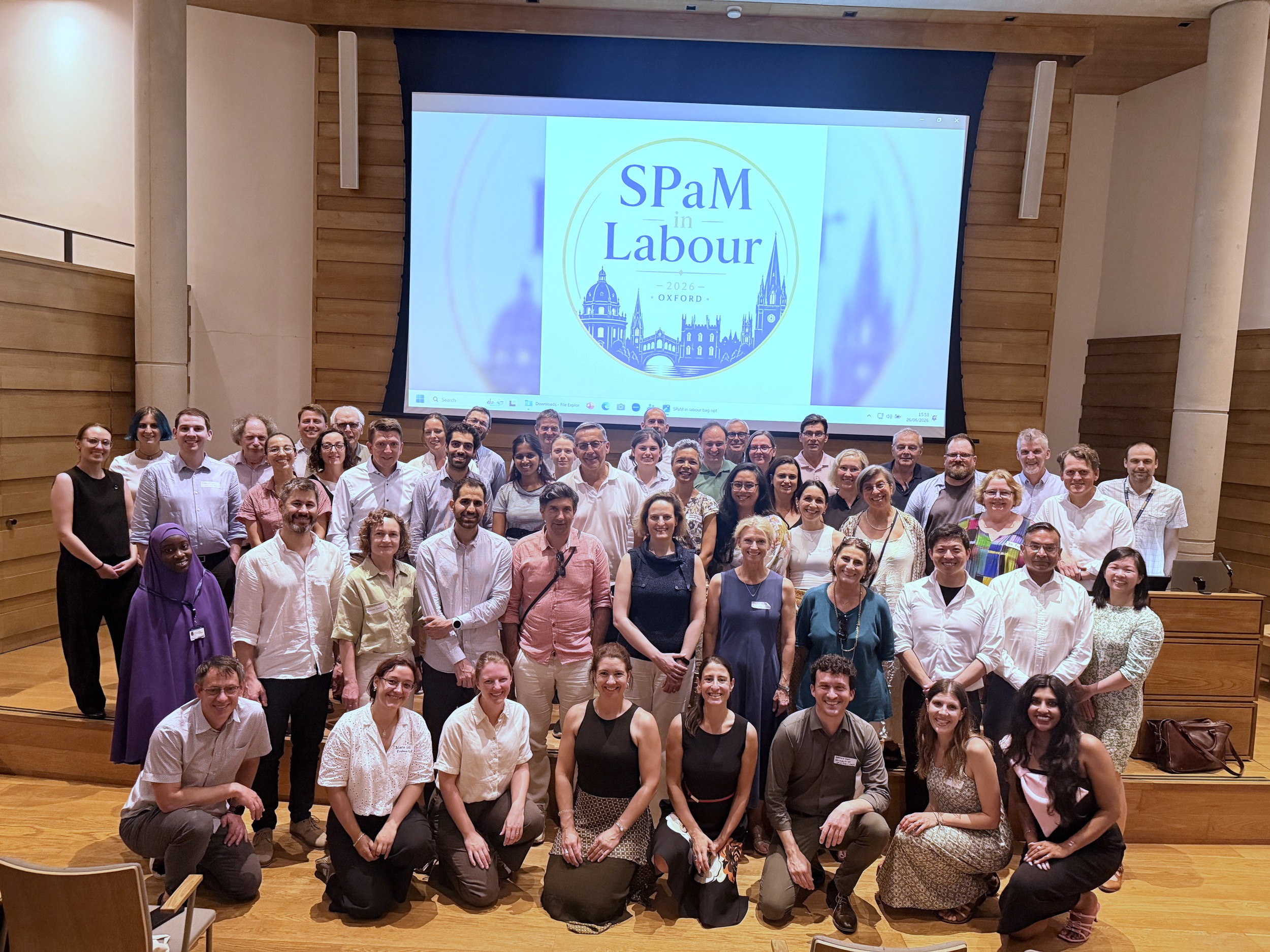
June 25th - 27th, Oxford, UK
The SPaM workshops provide a friendly forum for people with expertise across different fields, who are learning to speak the same multidisciplinary language and keep pushing forward the research in intrapartum monitoring. Anyone with an interest in intrapartum fetal monitoring and/or passion for healthy labour outcomes is welcome, including medical doctors, midwives or other health care professionals, mathematicians, engineers, PhD students, members of the public or industry representatives.
Videos of the presentations: youtube.com/playlist?list=PLPwcLXziaNsI

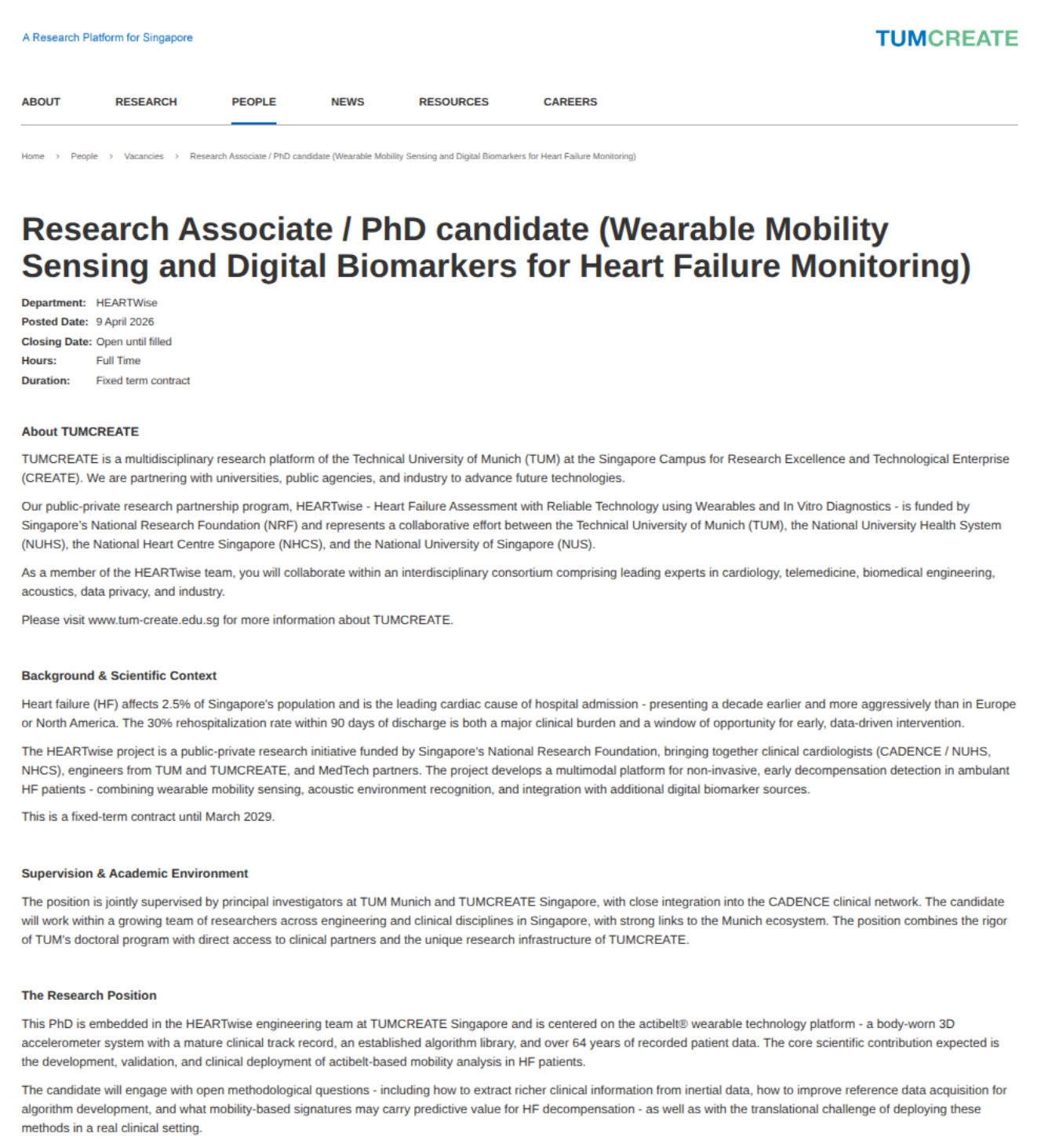
This PhD is embedded in the HEARTwise engineering team at TUMCREATE Singapore and is centered on the actibelt® wearable technology platform - a body-worn 3D accelerometer system with a mature clinical track record, an established algorithm library, and over 64 years of recorded patient data. The core scientific contribution expected is the development, validation, and clinical deployment of actibelt-based mobility analysis in HF patients.
The candidate will engage with open methodological questions - including how to extract richer clinical information from inertial data, how to improve reference data acquisition for algorithm development, and what mobility-based signatures may carry predictive value for HF decompensation - as well as with the translational challenge of deploying these methods in a real clinical setting.
Department: HEARTWise
Posted Date: 9 April 2026
Closing Date: Open until filled
Hours: Full Time
Duration: Fixed term contract
tum-create.edu.sg/vacancy/research-associate-phd-c...
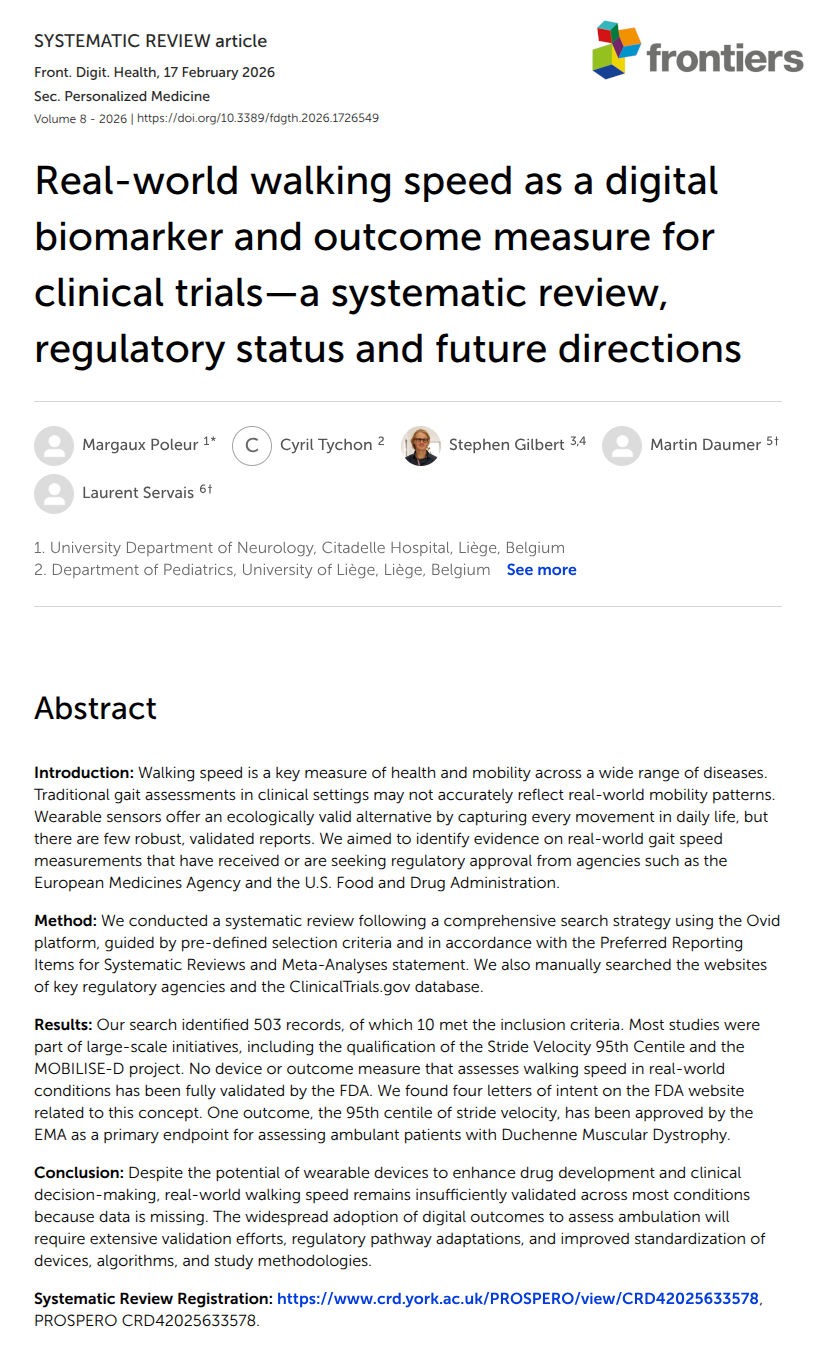
Blueprint for regulatory acceptance of real-world walking speed (RWS) outcomes - call for focused partnerships
A new systematic review in Frontiers in Digital Health provides a clear and actionable blueprint toward regulatory acceptance of real-world walking speed (RWS) as a clinical trial outcome, particularly in diseases where the 6-minute walk test (6MWT) is already regulator-familiar (e.g., MS, neuromuscular disorders, and also cardiovascular disease).
frontiersin.org/journals/digital-health/articles/1...
The review highlights that an RWS-based endpoint (stride velocity 95th centile) has already been qualified by EMA in ambulant Duchenne muscular dystrophy, demonstrating that acceptance is achievable with a well-defined context of use and a structured evidence package. It also summarizes ongoing interactions with FDA.
In MS, long-standing trial methodology work reinforces the limitations of traditional outcomes and the need for more ecologically valid functional measures:
pubmed.ncbi.nlm.nih.gov/18480462/
pubmed.ncbi.nlm.nih.gov/19073945/
pubmed.ncbi.nlm.nih.gov/35636268/
The key message is that progress now depends on finding the right partners to collect robust datasets and document results in well-known regulatory formats. Large, complex initiatives (e.g., IMI-like structures) have often faced major operational obstacles; focused, lean consortia may be more effective.
This topic has been discussed in many previous Winter Symposia of the Human Motion Project (thehumanmotioninstitute.org) and will also be part of the upcoming symposium on March 10th:
humanmotioninstitute.de/content/event/248
See also: doi.org/10.3389/fdgth.2026.1726549
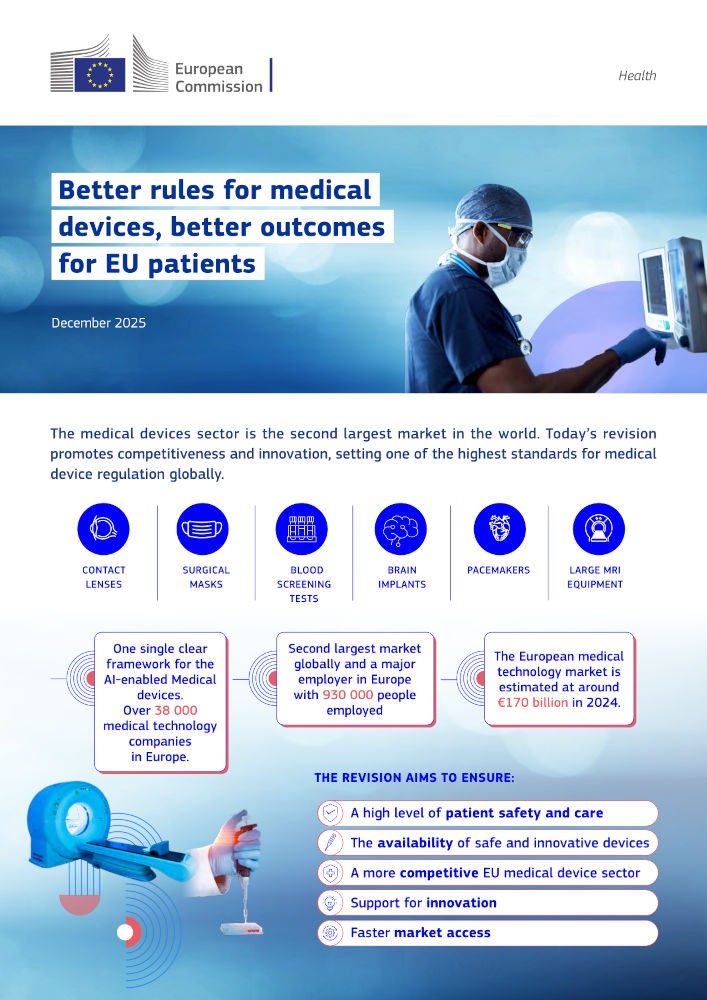
The medical devices sector is the second largest market in the world. Today’s revision
promotes competitiveness and innovation, setting one of the highest standards for medical
device regulation globally.